
Conservatory Window Films: Everything You Need to Know
How Conservatory Window Films Can Make Your Conservatory More Comfortable
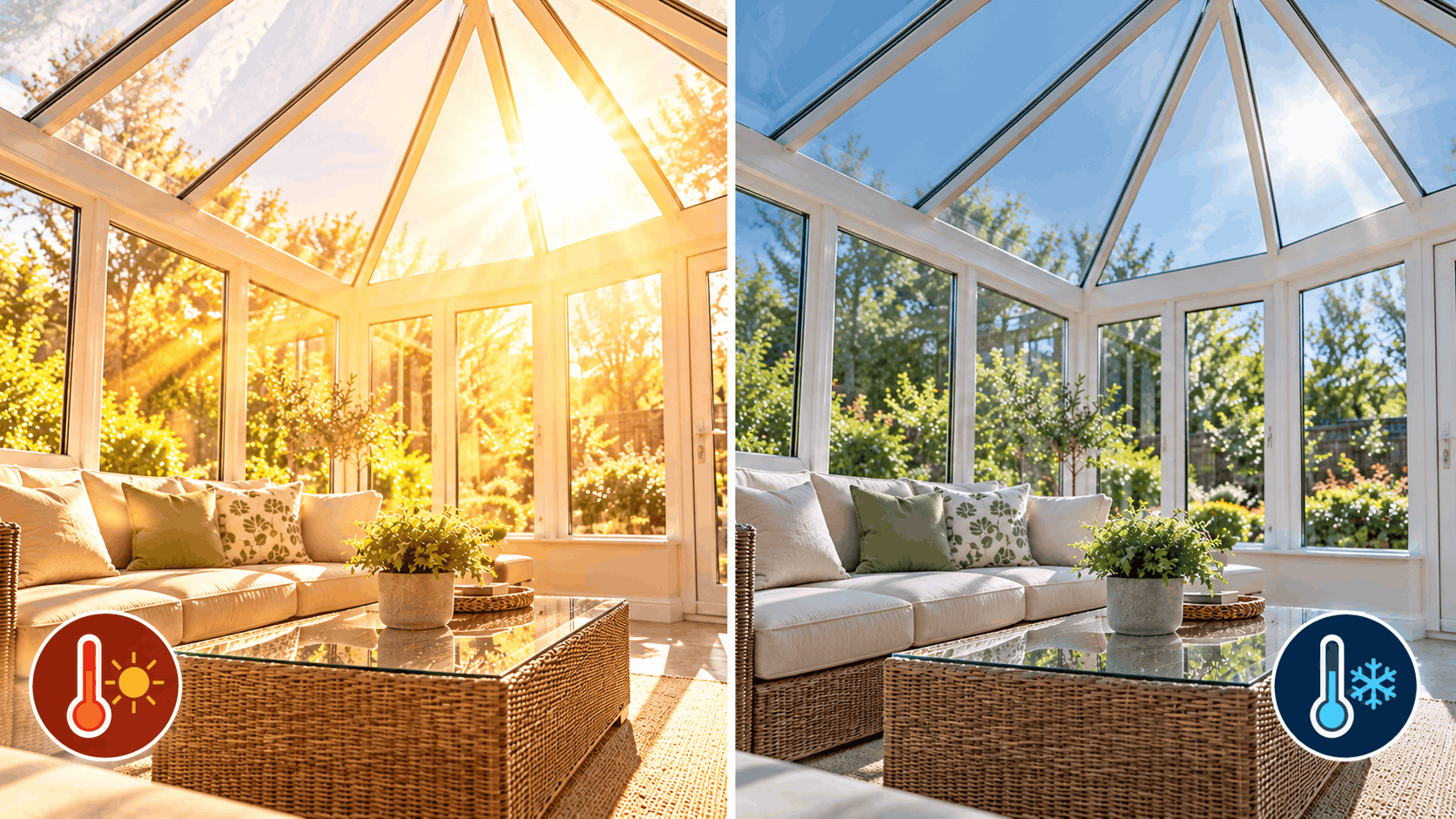
A conservatory should be somewhere you can relax, work, dine or spend time with the family. Unfortunately, the large areas of glass or polycarbonate that make conservatories so bright can also make them uncomfortable when the sun comes out.
On a warm, sunny day, solar energy passing through the glazing can quickly raise the temperature inside. Bright sunlight can also create glare on televisions and computer screens, while prolonged exposure to sunlight can contribute to the fading of furniture and furnishings.
Conservatory window film provides a relatively simple solution. Applied directly to existing glazing, solar control film is designed to reduce the amount of solar energy passing into the conservatory while retaining natural light and your view outside.
At PR Solar Window Film, we supply and professionally install solar window film for conservatories throughout the UK, including solutions for both glass and polycarbonate conservatories.
What Are Conservatory Window Films?
Conservatory window film is a thin, specialist laminate applied to existing glazing to change the way solar energy passes through it.
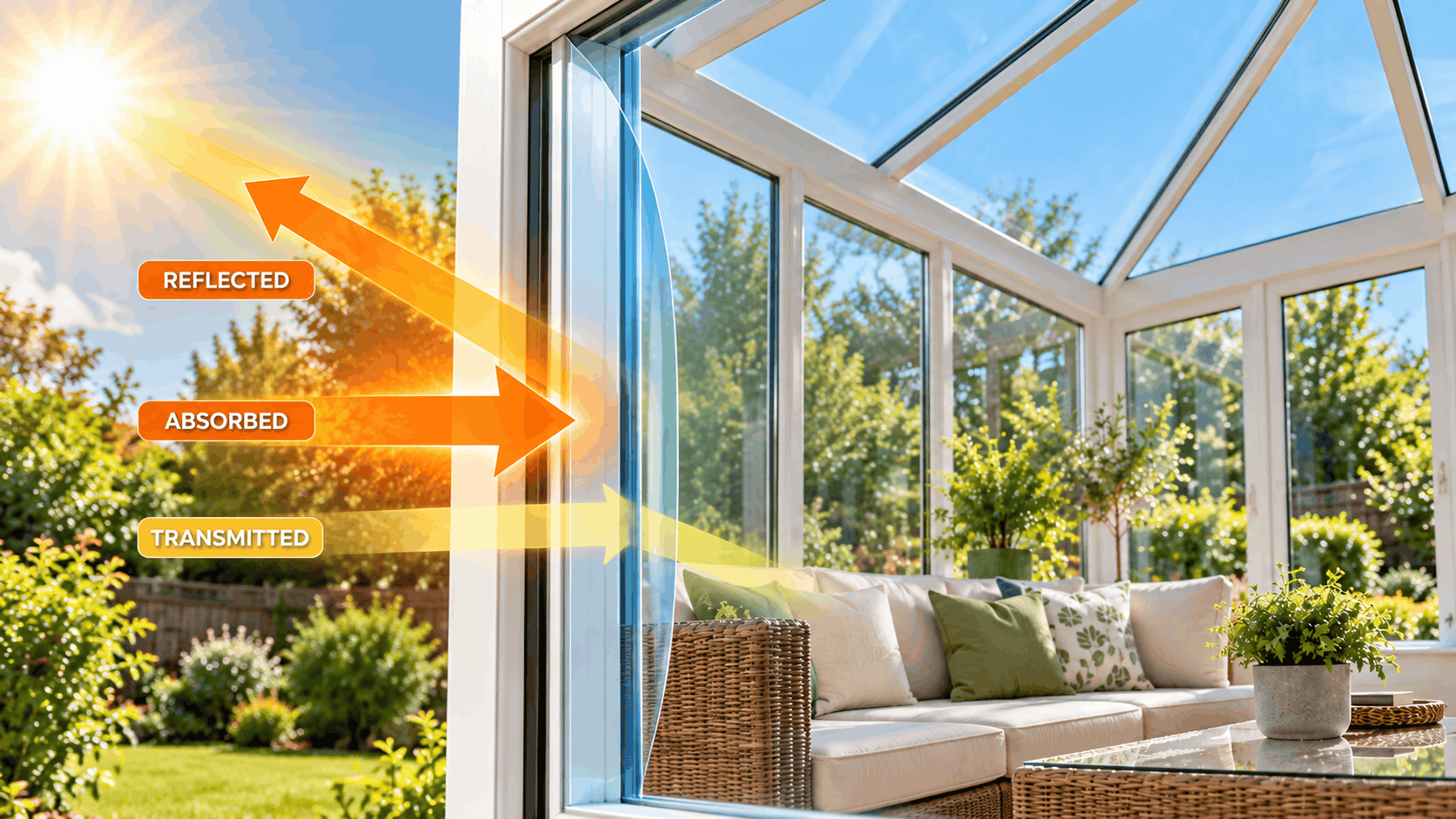
Solar radiation reaching a window can essentially be transmitted through the glazing, absorbed by it or reflected away. Solar control films are engineered to alter this balance, reducing the amount of solar energy transmitted into the room.
This isn’t simply a marketing concept. Scientific research published in Energy and Buildings has examined the thermal and energy performance of solar control films on glazing. Experimental and modelling studies have found that applying solar control films can reduce solar heat gain through windows, although performance varies according to factors such as the glazing, film specification and orientation of the windows.
Further research published in Building and Environment found that solar control films can improve thermal and visual comfort and reduce cooling requirements in appropriate circumstances.
In practical terms, this means less unwanted solar heat and glare entering your conservatory without having to permanently cover the glass with blinds or curtains.
Do Conservatory Windows Film Actually Work?
Yes. Properly specified solar control window film can substantially reduce solar heat gain and glare through conservatory glazing.
The important point is that window film doesn’t work like air conditioning. It doesn’t actively cool the air inside your conservatory. Instead, it tackles part of the problem at the glazing by reducing the amount of solar energy entering the room in the first place.
That distinction matters.
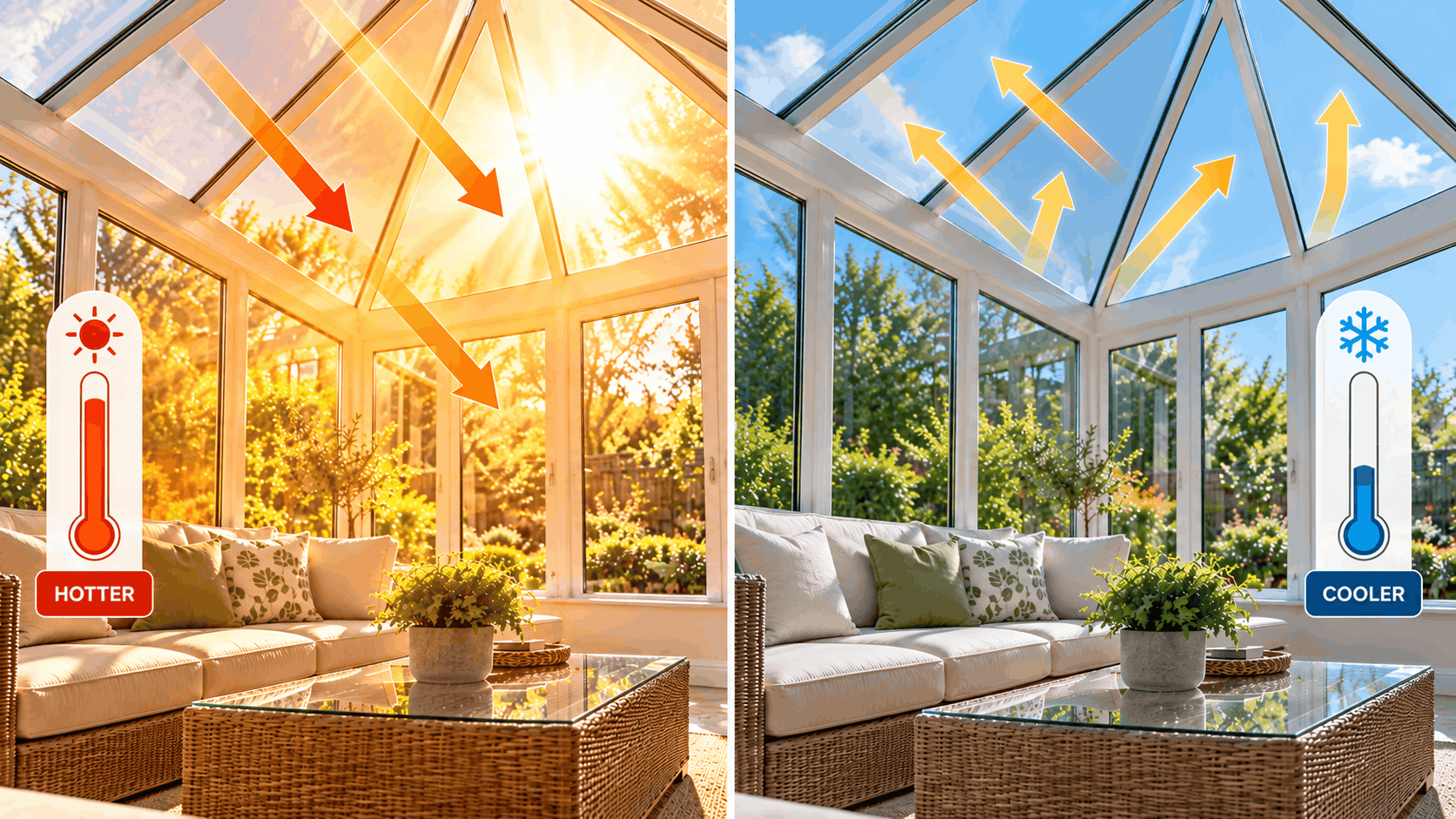
If your conservatory has already become extremely hot, installing window film won’t suddenly generate cold air. What it can do is reduce the solar heat entering through treated glazing, helping the space remain considerably more comfortable during sunny weather.
Research into solar control films supports this principle. A study examining filmed and unfilmed glazing describes solar control films as being designed to absorb or reflect incident solar radiation to reduce solar transmission through glass.
What Are the Main Benefits?
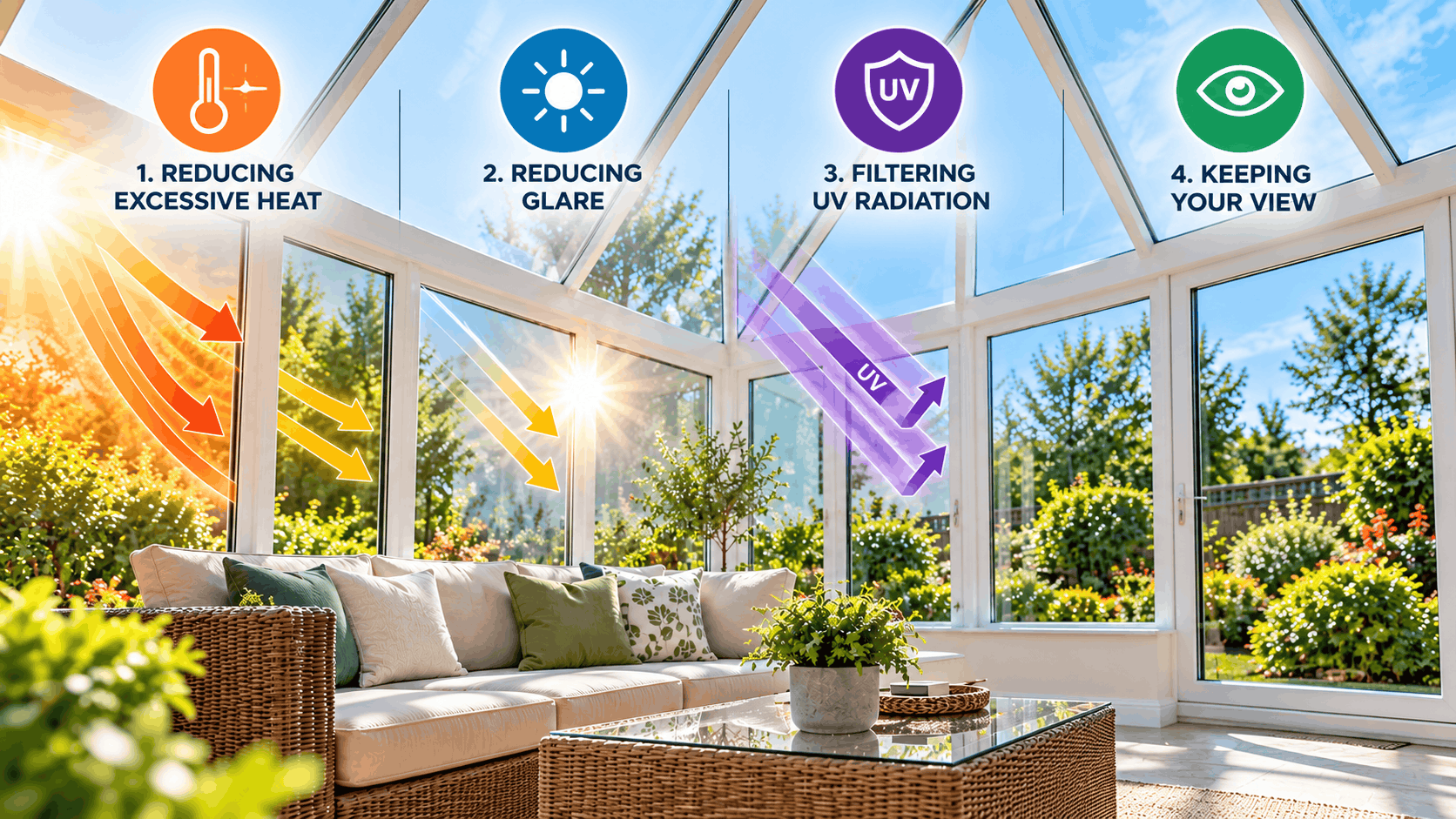
Heat is probably the biggest reason homeowners consider conservatory window film.
Conservatories can contain a significant amount of glazing, including glazed roofs in some designs. This gives sunlight a large surface area through which to enter.
The solar films we install can provide substantial reductions in solar heat gain, with the precise performance depending on the film and type of conservatory glazing.
You can read more about the performance of our conservatory window film and the different solutions available for glass and polycarbonate conservatories.
A bright conservatory isn’t necessarily a comfortable conservatory.
Direct sunlight can produce significant glare, particularly if you’re trying to watch television, use a laptop, read or work from home.
Solar control film can reduce this glare without requiring you to close blinds and turn your bright conservatory into a dark room. You can therefore retain much of what people love about a conservatory – natural daylight and a view of the garden – while making the light more manageable.
Ultraviolet radiation is another component of sunlight worth considering.
Specialist window films can reject very high proportions of UV radiation passing through treated glazing. Our conservatory solutions can provide up to 99% UV rejection, depending on the film and installation.
This is particularly useful in conservatories containing sofas, rugs, flooring, artwork and other furnishings.
UV isn’t the only cause of fading – visible light, heat, materials and other environmental factors can also contribute – so no window treatment can guarantee that furnishings will never fade. Reducing UV exposure, however, removes one important contributor.
One of the biggest advantages over traditional conservatory blinds is that window film doesn’t have to block your view.
Blinds can certainly control sunlight, but once they’re closed, much of the reason for having a conservatory disappears with them.
Solar window film works directly on the glazing, meaning you can still look out into the garden and enjoy natural daylight while benefiting from solar protection.
There’s also no collection of roof blinds to regularly dust and clean.
Frequently Asked Questions
Yes, but glass and polycarbonate require different solutions.
This is one reason we recommend having conservatory film professionally specified rather than simply purchasing a generic roll of window film and applying it yourself.
At PR Solar Window Film, we provide solutions for both glass conservatories and polycarbonate conservatories. The appropriate film and installation method depends on the construction and glazing involved.
A professional assessment also allows us to look at the conservatory as a whole, rather than assuming the same product is suitable for every pane and roof.
This is a common concern.
Any solar control treatment affects the way light and solar energy interact with glazing to some degree, but the objective isn’t to turn your conservatory into a dark room.
Different films offer different balances between visible light transmission, glare reduction and solar energy rejection.
This is why choosing the right specification matters. Some homeowners prioritise maximum heat and glare reduction, whereas others want a subtler appearance and greater levels of natural light.
We can discuss these priorities with you before recommending an appropriate solution.
Neither solution is right for absolutely everyone, but window film has several practical advantages.
Blinds provide adjustable shading, whereas solar film is a permanent treatment to the glazing. Window film, however, doesn’t require you to close off your view to obtain solar protection, takes up virtually no additional space and requires very little ongoing maintenance.
It can also be considerably less intrusive than fitting blinds across a complicated conservatory roof.
For homeowners whose main problems are excessive heat, glare and UV exposure, solar control film can therefore be an attractive alternative.
High-quality, professionally installed window film is designed as a long-term solution rather than a temporary summer measure.
The lifespan will depend on the film, glazing, installation and environmental conditions. At PR Solar Window Film, selected conservatory films and installations are backed by guarantees of up to 10 years.
Maintenance is also straightforward. Once installed and cured, the treated glazing can be kept clean with gentle cleaning methods rather than requiring complicated specialist maintenance.
If excessive sunshine means your conservatory becomes uncomfortably hot or difficult to use during warmer weather, solar control window film is certainly worth considering.
Rather than changing the structure of the conservatory, the film works with your existing glazing. It can reduce solar heat gain, cut glare, reject UV radiation and preserve your view outside, helping you get more use from a room you’ve already invested in.
Scientific research into solar control glazing also supports the underlying technology: altering the amount of solar radiation transmitted through windows can affect heat gain and thermal comfort. The exact results in an individual conservatory will always depend on its glazing, orientation, size and the film selected.
At PR Solar Window Film, we’ve been working with window film since 2000 and provide professional conservatory window film installation throughout the UK. We can visit your property, assess the conservatory, take measurements and recommend an appropriate solution for your particular glazing and requirements.
If your conservatory is becoming too hot or glare is stopping you from enjoying the space, find out more about our solar window films for conservatories or contact us for a free quotation.
Further Reading and Research
For readers interested in the science behind solar control window films, research has been published in peer-reviewed journals including Energy and Buildings and Building and Environment.
Pereira, J. et al. (2019), “Thermal, luminous and energy performance of solar control films in single-glazed windows”, Energy and Buildings. View the research
Pereira, J. et al. (2020), “Thermal and visual comfort, energy use and environmental performance of glazing systems with solar control films”, Building and Environment. View the research
Li, C. et al. (2015), “Experimental and theoretical study on the effect of window films on building energy consumption”, Energy and Buildings. View the research